FRUIT
How much fruit is jam?
In England a jar called jam must be made with at least 350 g of fruit per kilo for most fruits, and extra jam with at least 450 g.
Read a jar sambatadulce
THE SCIENCE AND THE LABEL
Jam is four things in balance: fruit, pectin, acid and sugar.
Read a jar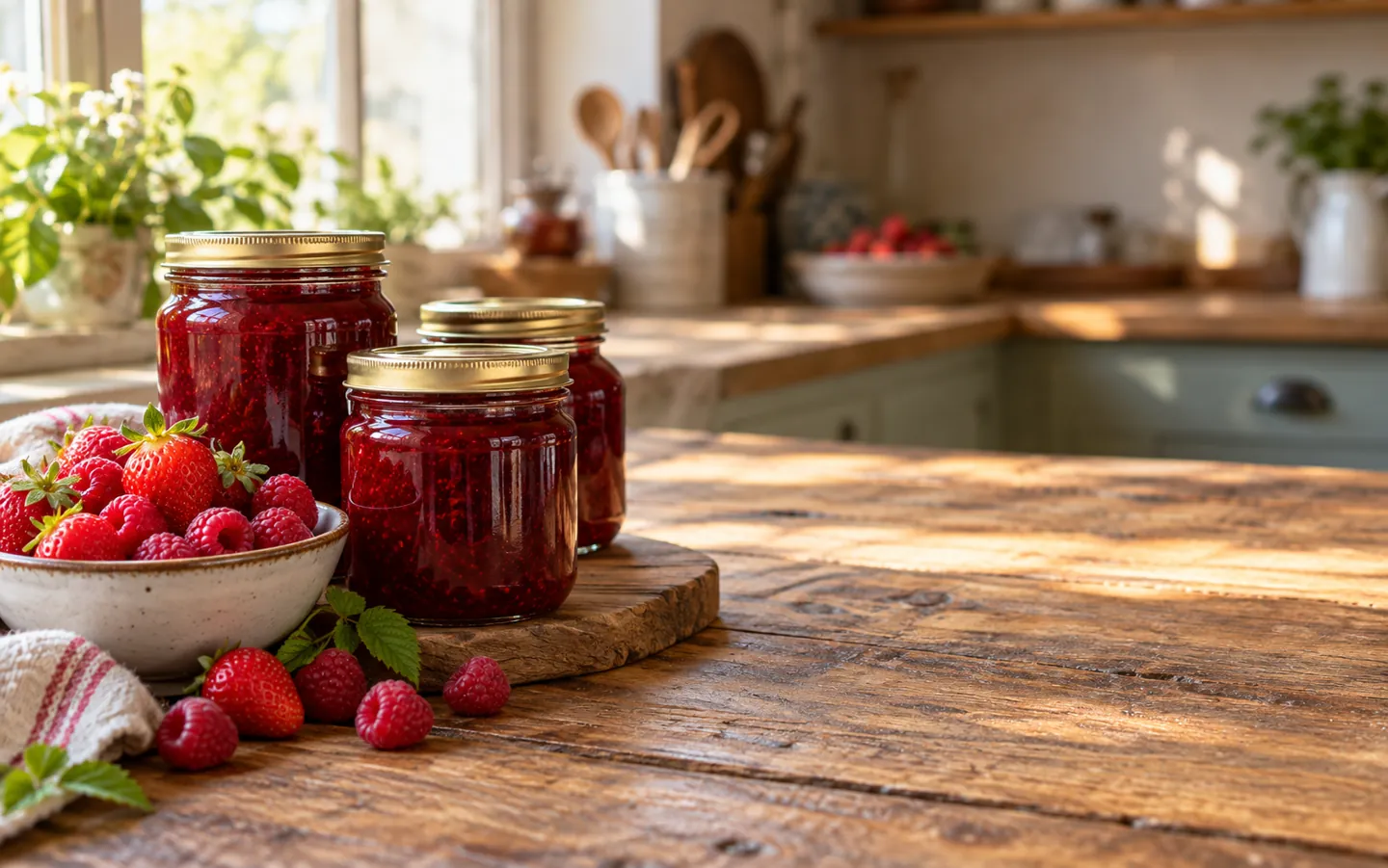
FRUIT + SUGAR+ pectin + acid
Get the balance right and it sets; get it wrong and you have syrup or rubber. The same balance sits behind the two numbers printed on every jar of jam sold in England.
Updated
THE SHORT ANSWER
Each ingredient has a job.
Change one and the others have to change too.
FRUIT
In England a jar called jam must be made with at least 350 g of fruit per kilo for most fruits, and extra jam with at least 450 g.
Read a jarSUGAR
Food scientists at the US National Center for Home Food Preservation say sugar prevents the growth of microorganisms and helps the gel form, so traditional recipes should not be cut back.
See the numbersSETTING
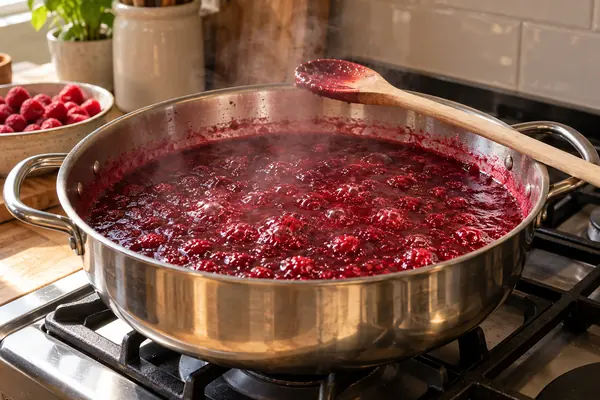
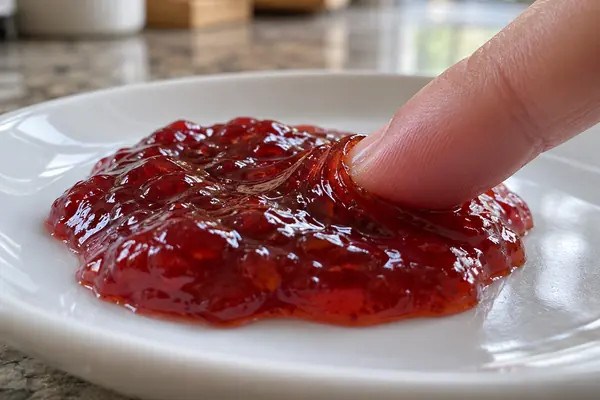
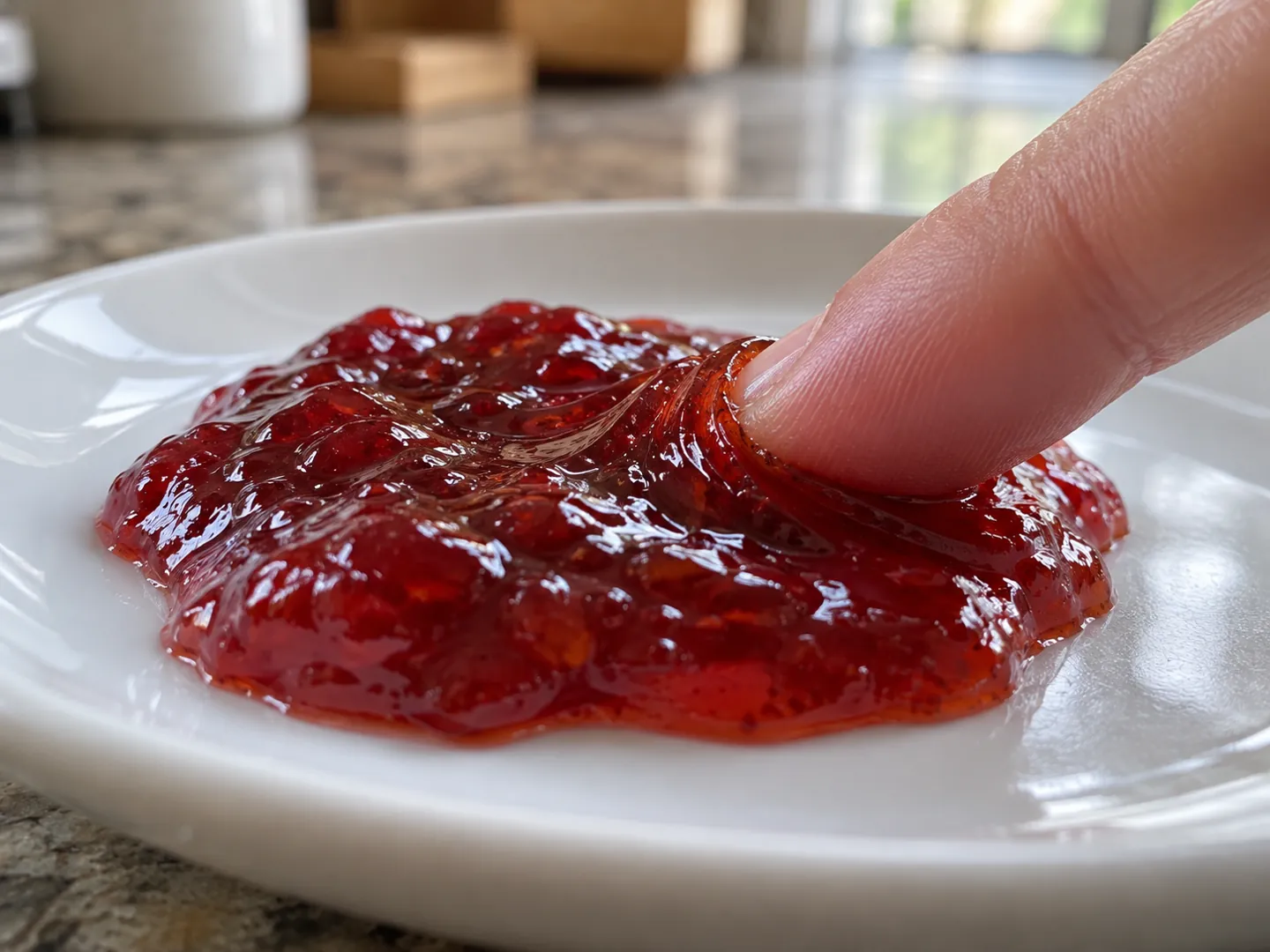
The most dependable test is temperature: about 8°F above the boiling point of water. A cold plate or a spoon that sheets the drops works too.
How to testGeneral information only, not medical advice. For advice about your own health, speak to a doctor, pharmacist or other qualified health professional.
READ THE JAR
In England some names for sweet spreads are reserved: a product can only use them if it meets a fixed recipe. Pick a name to see the minimum fruit it promises. The bar shows how much fruit that name requires.
Based on Schedule 1 of the Jam and Similar Products (England) Regulations 2003 and Trading Standards guidance. Figures are for most fruits; some fruits, such as blackcurrants or quinces, have different minimums.
TWO NUMBERS WORTH KNOWING
The legal sugar level for jam in England,
and the temperature at which jelly sets at sea level.
60% or more
Minimum soluble dry matter in jam
Jam and similar products must have a soluble dry matter content of 60% or more, measured by refractometer at 20°C. Products labelled "reduced sugar" may instead have 25% to 50%.
SOLUBLE SOLIDS · ENGLAND
220°F
Jelly done at sea level
That is 8°F above the boiling point of water. The National Center for Home Food Preservation says to subtract 2°F for each 1,000 feet above sea level.
SETTING POINT · NCHFP
Every jar of jam sold in England must also state "Prepared with X g fruit per 100 g" and "Total sugar content: X g per 100 g", in the same field of vision as the product name, according to Trading Standards guidance.
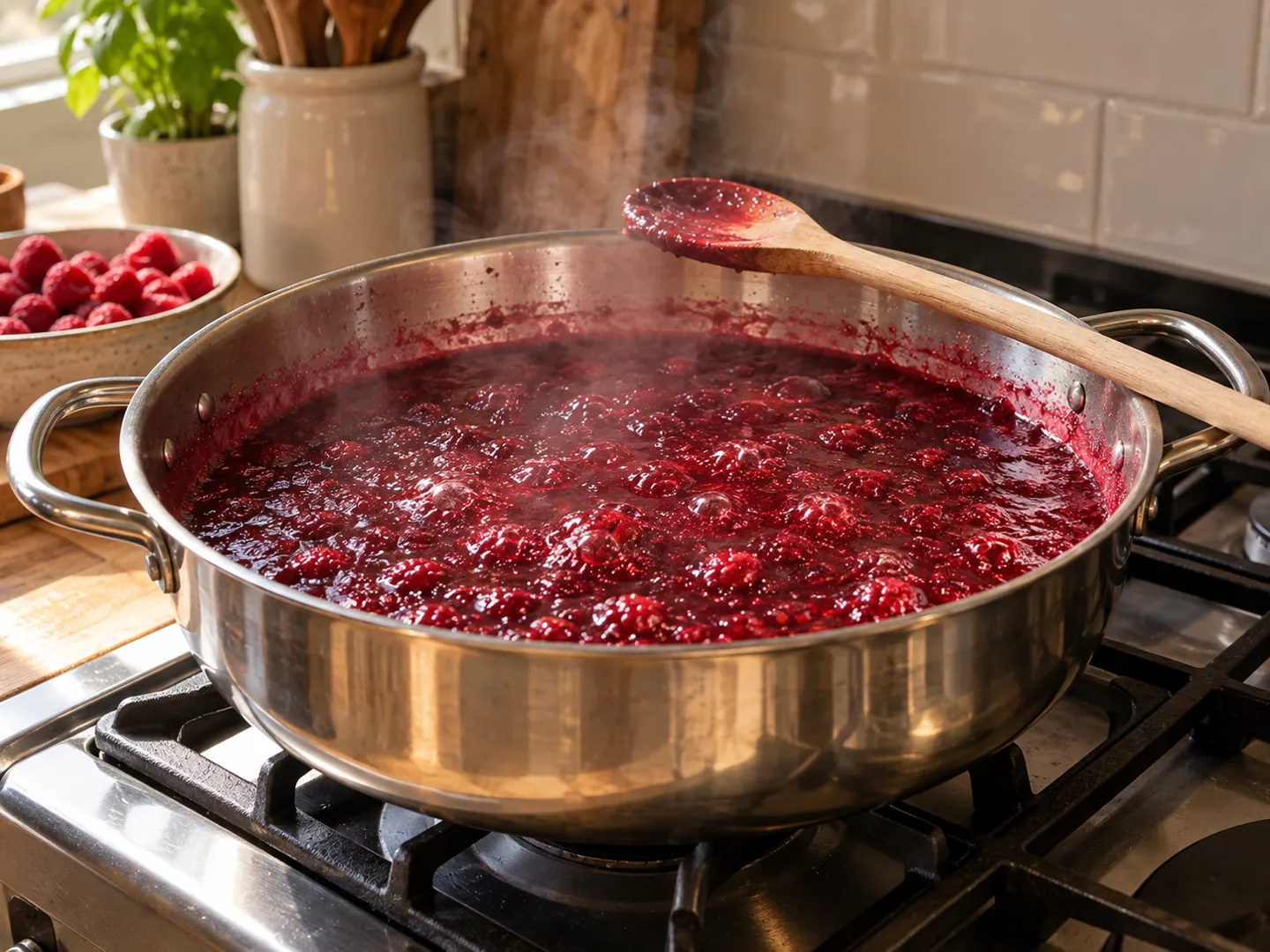
FOUR STEPS FROM THE FOOD SCIENTISTS
These points come from the US National Center for Home Food Preservation, a university extension service that tests home preserving methods.
The best pectin is in just-ripe fruit. For jelly without added pectin, about a quarter of the fruit should be under-ripe.
Too little sugar prevents gelling and may let yeasts and moulds grow. For less sugar, use a tested recipe with a pectin made for it.
Use a thermometer, watch for two drops sheeting off a cool spoon, or chill a little on a plate in the freezer for a few minutes.
The NCHFP advises filling hot jam into sterile jars with a quarter-inch headspace, sealing with self-sealing lids and processing for 5 minutes in boiling water. Wax seals are no longer recommended.
STORING A JAR
Home-canned jam keeps its best quality for up to a year in a cool, dark, dry place. Once opened, the NCHFP says full-sugar cooked jams are best kept in the fridge for about a month, and lower-sugar spreads may keep for less.
Mould can still grow on the surface. Mycotoxins have been found in some jars of jelly with surface mould, so the NCHFP advises discarding the whole jar if there is any mould or a fermented, yeasty smell, rather than scraping the top off.
Questions
In England, jam must be made with at least 350 g of fruit per kilo for most fruits, and extra jam with at least 450 g. Extra jam also uses unconcentrated pulp, and some fruits such as apples and pears may not be mixed with others in it.
Trading Standards guidance says jams and similar products must show both "Prepared with X g fruit per 100 g" and "Total sugar content: X g per 100 g", where you can see them together with the product name.
Not in a traditional recipe. The National Center for Home Food Preservation says too little sugar prevents gelling and may allow yeasts and moulds to grow. Special pectins exist for reduced-sugar jams, with their own tested recipes.
Setting needs the right balance of pectin, acid and sugar. Fruits like strawberries, cherries and blueberries contain little pectin; too little acid means the gel never sets, and overcooking can break pectin down.
The NCHFP advises against it. Mycotoxins have been found in some jars of jelly with surface mould, so it recommends discarding the entire contents of a jar that shows any mould.
ABOUT THIS NAME
sambatadulce.com is part of the DoodleSale portfolio. It isn't in an auction right now, but you can ask about leasing it.